Protect the pumping assets that keep product moving.
We support multiproduct liquid and NGL pipeline operators whose continuous throughput depends on the availability of critical centrifugal pumps, engineered mechanical seals, and associated seal-support systems.
Availability at the station is availability on the system.
Downtime on a pipeline pump has direct commercial consequences. Engineering and maintenance resources are frequently distributed across a wide geographic footprint, and few operators can carry deep pump and seal-system expertise at every station.
URS provides that depth where and when it is needed — from repeat-failure investigation and seal-support-system assessment through repair surveillance and verified return to service.
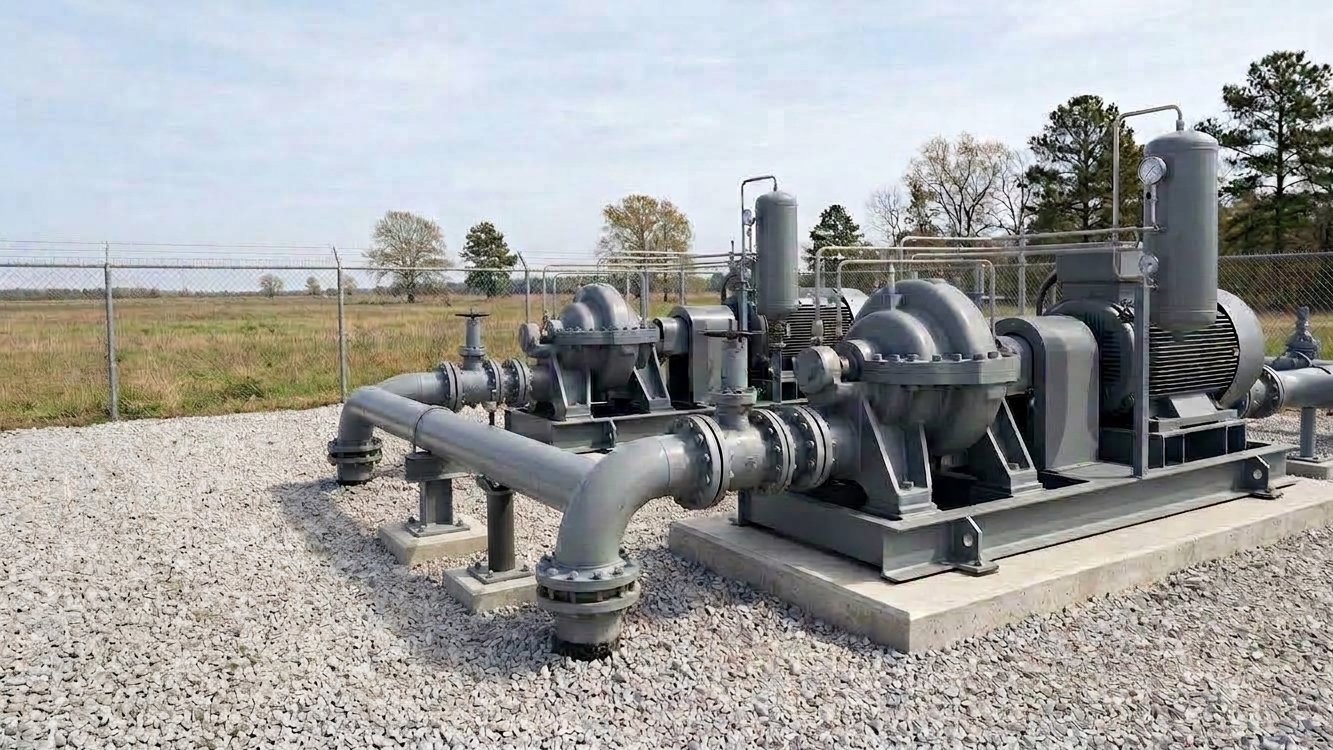
Configurations we commonly see.
Pipeline and terminal services involve a range of API 610 pump types. Single-stage BB2 pumps are often used as mainline pumps, and multistage BB3 and BB5 pumps are common where higher discharge pressures are required. Vertically suspended VS6 double-casing pumps are often used as booster pumps on the mainline, where their can design provides added NPSH margin. Dual mechanical seals are typical across these services, either unpressurized with buffer-fluid systems or pressurized with barrier-fluid systems.
These are common configurations, not the limits of URS scope. The relevant question is always what the specific service, pump, and support system actually require.
- Repeat seal or pump failures at a mainline or booster station
- Barrier- and buffer-fluid support-system assessment
- Repair scope, acceptance criteria, and shop surveillance
- Installation verification and return-to-service support
- Condition-monitoring and response practices across distributed stations
- Technical capacity for teams covering a wide geographic footprint